Eyes Faster Than Hands: Reading Shapes and Colours
Eyes Faster Than Hands: Reading Shapes and Colours
Hand your phone to an experienced player and they'll point immediately: "this one's about to pop", "that line is nearly complete". They're not faster with their fingers than you — they're faster with their eyes, because they never look at one cell at a time. The human brain automatically groups things that are alike and near each other into a single unit: three mangosteens side by side stop being three separate objects and become one cluster. Beginners count fruit one by one; experienced players see the whole cluster in a single glance. That skill — scan, compare, match — is exactly what the two games below train, each in its own way.
Xếp Trái Cây: see the cluster first, count later
In a match-3 game like Xếp Trái Cây (Tropi Pop), the next move is already on the board before you touch anything: somewhere there are always two fruits waiting for a third. Your job is to scan the board by region — which area is "dense" in one kind of fruit — instead of reading cell by cell like lines of text. And the best move is often not the one that pops something right now: it's the clearing move, a swap somewhere else that pulls a third fruit next to a cluster and sets off two pops in a row.
After a while you develop the habit of looking two or three moves ahead on your own: "swap here and the berries below reach three — and once they pop, the row above is nearly complete too." That's planning in pictures — no notes, no arithmetic, just holding an image of "the board after my move" in your head.
- Play now: xeptraicay.synerworlds.com
Xếp Bi: the pattern of the path
Xếp Bi (Chroma Beads) is also colour recognition, but hard in a different way: you don't swap — you guide one bead at a time along any open path to join its colour in a line — across, down or diagonally — on a 9×9 grid. Complete a line of five beads of one colour and it clears, opening up the board. The trap: after every move, new beads drop in at random, quite capable of blocking the path you just cleared.
So the skill here is not only seeing clusters but keeping paths: don't herd all of one colour into a single corner, always leave a route for the bead that needs to get home, and accept breaking up a nearly finished line to save the whole board when the new beads land badly. It's closer to tidying a cramped room than solving a puzzle: order has to be maintained continuously, not achieved once.
- Play now: xepbi.synerworlds.com
A small exercise: which direction does your eye scan fastest?
In the letter grid below there are exactly three clusters of three identical letters in a row — horizontally, vertically or diagonally. Don't count cell by cell; glance across it the way you'd look at a game board, and see which cluster you find first:
X O O X X O
O X X X O X
X O O X O O
O X X O X O
Answers: the second row holds X X X at columns 2–4; the fourth column holds X X X at rows 1–3; and a diagonal X X X runs through (row 2, column 3), (row 3, column 4) and (row 4, column 5). If you found the vertical cluster first, your eyes are used to scanning in columns; if the diagonal jumped out at you, that's the sign of someone who reads the whole position at once. All three scanning styles are useful in games — and all of them get faster with every game you play.
🧠 Skills trained
Xếp Trái Cây and Xếp Bi train: Pattern recognition · Focus · Long-term thinking.
See more on the Train your mind by goal page.
Read next: The brain loves patterns: numbers, images, colours and words.
📚 पढ़ना जारी रखें
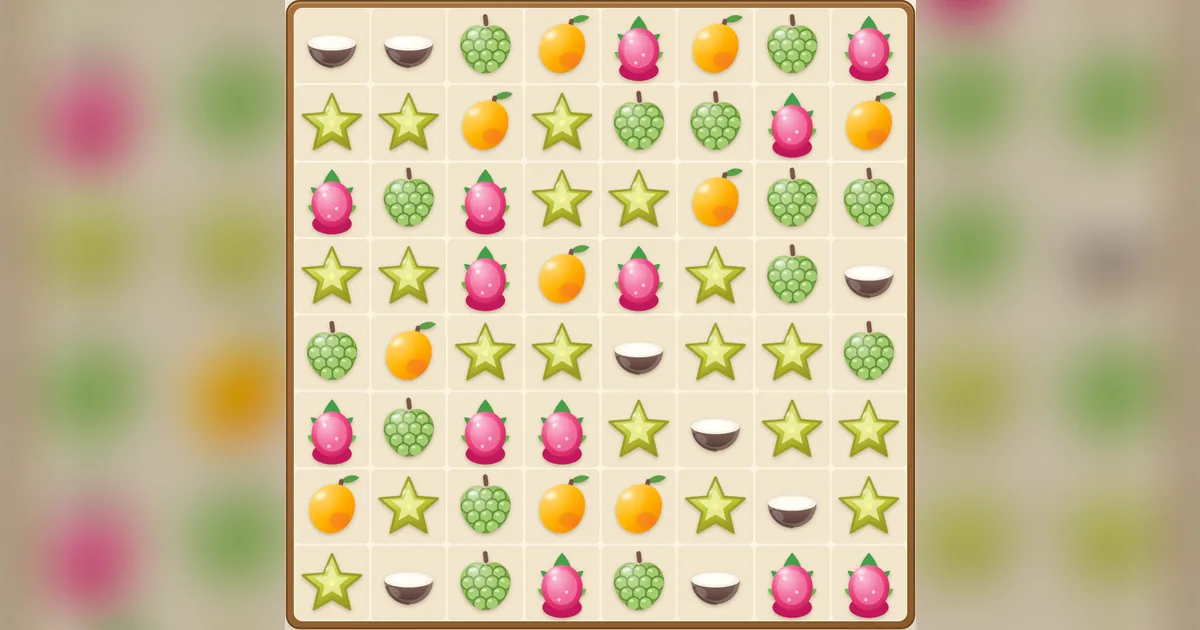
Tropi Pop is live: match-3 with Vietnamese tropical fruits across 60 levels from Cái Răng to Phú Quốc
Tropi Pop (Xếp Trái Cây) is live at xeptraicay.synerworlds.com — a match-3 game starring 7 Vietnamese tropical fruits: dragon fruit, mangosteen, custard apple, durian, mango, star fruit and coconut. 60 levels across 4 regions, special fruits, falling baskets, leaf tiles and a star leaderboard.
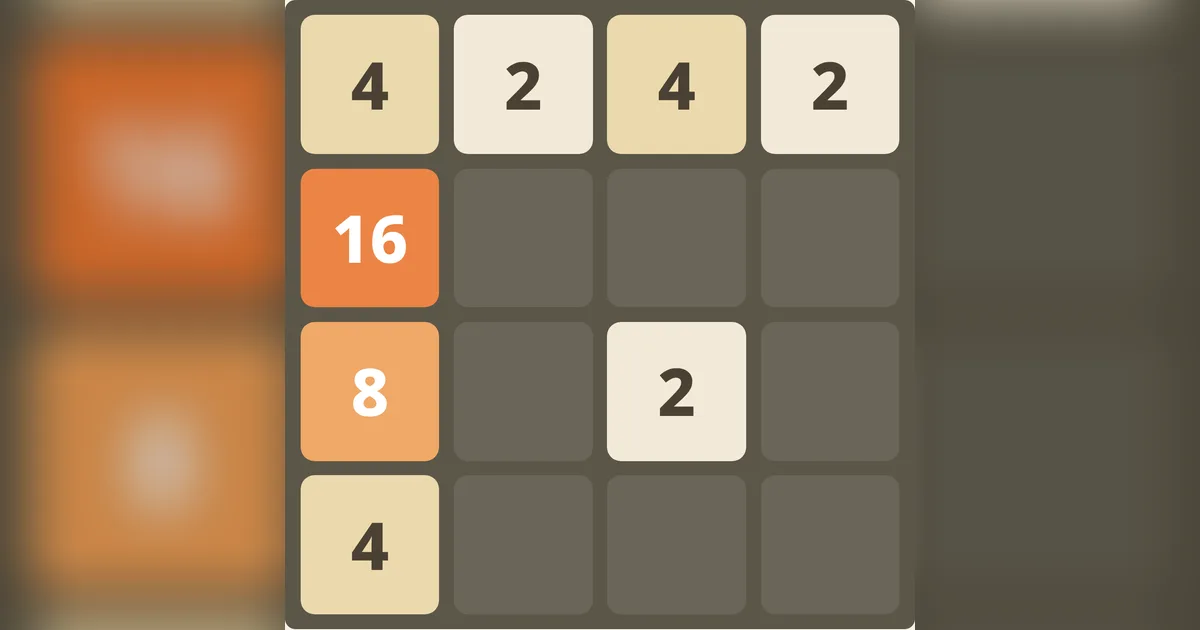
The Brain Loves Patterns: Numbers, Images, Colours and Words
Why do we see faces in clouds and guess the next note of a song? The brain is a pattern-hunting machine — and the four pattern families in everyday games (numbers, images, colours, words) each train a different kind of attention.
Seeing the Rule in a Run of Numbers
You don't need to be good at maths — you need to spot the rule. From the doubling chain 2, 4, 8, 16 in Ghép Số to Sudoku's art of elimination, number patterns are the easiest forward-looking thinking to start with.
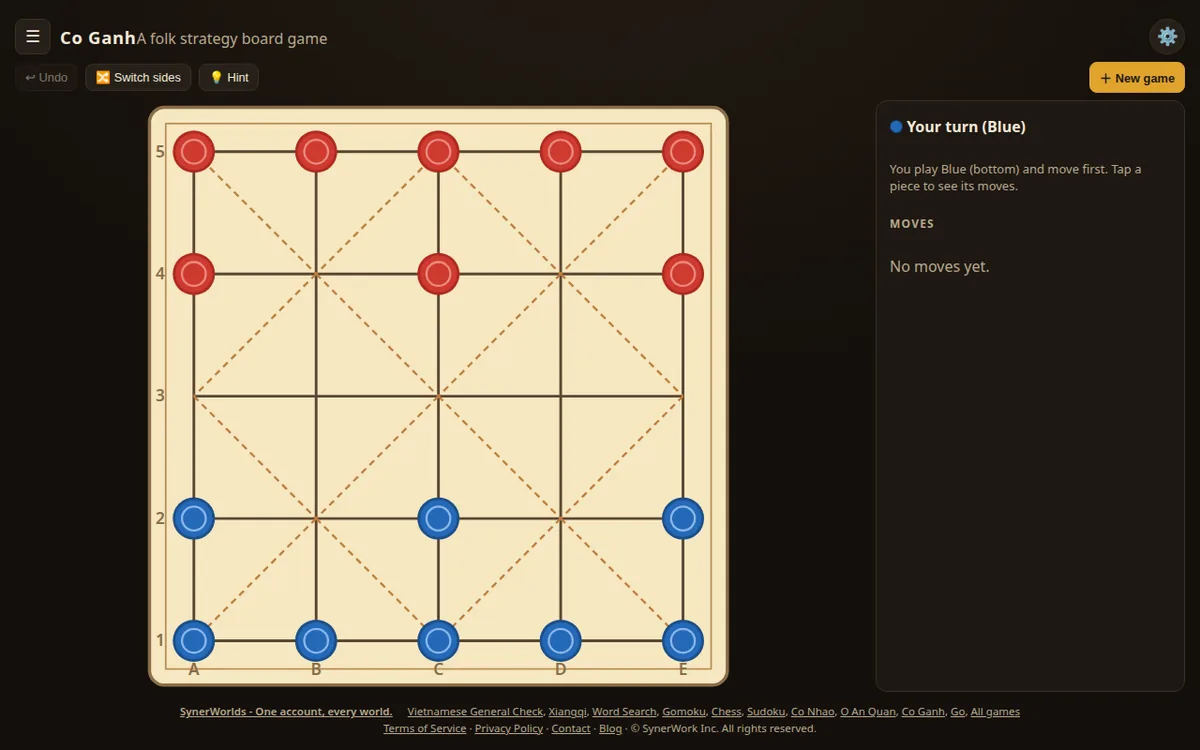
Cờ Gánh Endgames: Winning by Blockade, Liberty Races, and the Two Faces of the Fortress
As the board thins, Cờ Gánh becomes arithmetic: winning by leaving the opponent no move, liberty races between mutually surrounded groups, the endgame carry trap, and why a self-surround fortress can become a coffin.
टिप्पणियाँ
अभी तक कोई टिप्पणी नहीं है। अपने विचार साझा करने वाले पहले व्यक्ति बनें!