Seeing the Rule in a Run of Numbers
Seeing the Rule in a Run of Numbers
Plenty of people who call themselves "bad at maths" happily spend hours on games that are nothing but numbers. There's no contradiction: doing well at these games doesn't take fast arithmetic — it takes a different ability entirely, spotting the rule. Every sequence tells a story: each number is born from the one before it by some transformation. Catch the transformation, and you can predict everything that follows. The two games below train exactly that ability in opposite ways: one builds a rule upward, the other filters a rule out.
Ghép Số: build one long doubling chain
The rules of Ghép Số (our 2048-style game) fit in one sentence: slide the whole board, and when two equal tiles meet they merge into a doubled tile. 2 merges with 2 to make 4, 4 with 4 to make 8, 8 with 8 to make 16… on up to 128, 256, 512. It looks like addition, but anyone who plays for a while discovers the hard part isn't adding — it's order. Let your biggest tile get stranded in the middle and the whole game jams; experienced players "raise" their biggest tile in a corner and let smaller tiles stream toward it in the right order. Every slide is a decision: merge now for breathing room, or hold off so two pairs can merge back-to-back into something bigger?
That is rule-thinking in practical form: you stop looking at the tile in front of you and start looking at the chain it belongs to, and the place it needs to reach. On SynerWorlds, Ghép Số has a regular mode and a Daily mode — one shared seed per day for every player — which makes "seeing number rules" an easy five-minute morning habit.
- Play now: ghepso.synerworlds.com
Sudoku: the pattern of what is missing
Sudoku runs in the opposite direction: there is no calculation in it at all, despite the board full of numbers. The only question is: "in this row, this column, this 3×3 box, which number has not appeared yet?" A row already holding 1, 2, 3, 5, 6, 7, 8, 9 leaves exactly one possibility for its empty cell: 4. That's not a guess — it's elimination. The most basic technique, scanning rows and columns, is itself a pattern exercise: your eyes sweep in straight lines, your head keeps the "already seen" list, and any cell with exactly one candidate left is settled.
The longer you play, the more Sudoku feels like untangling rather than maths: the answer isn't computed, it emerges once every wrong possibility has been crossed out. Anyone who enjoys the feeling of narrowing down from "could be anything" to "must be this" will take to it — and it's the gentlest possible door in for people who shy away from numbers, because there's genuinely no adding or subtracting involved.
A small exercise: try it right now
No game needed — try these two with your eyes only:
Question 1 — find the rule. In the sequence 3, 6, 12, 24, … what comes next? And in 1, 1, 2, 3, 5, 8, …? (Answers: in the first, each number doubles the previous one → 48. In the second, each number is the sum of the two before it → 13. Two different rules, but the same move: read the earlier numbers to predict the later ones.)
Question 2 — Sudoku-style elimination. A row of nine cells has only two empty cells left, and the two missing numbers are 4 and 9. Look up the column of the first empty cell: the number 9 already appears elsewhere in that column. So the first cell cannot be 9 — it must be 4, and the remaining cell is 9. You just solved a Sudoku move without a single sum: elimination only.
If you can do those two, you already have everything you need to play both games. The rest — keeping the corner for your biggest tile, scanning rows and columns faster — is just familiarity that builds day by day.
🧠 Skills trained
Ghép Số and Sudoku train: Calculation & counting · Logic · Long-term thinking.
See more on the Train your mind by goal page.
Read next: The brain loves patterns: numbers, images, colours and words.
📚 Συνεχίστε την ανάγνωση
The Brain Loves Patterns: Numbers, Images, Colours and Words
Why do we see faces in clouds and guess the next note of a song? The brain is a pattern-hunting machine — and the four pattern families in everyday games (numbers, images, colours, words) each train a different kind of attention.
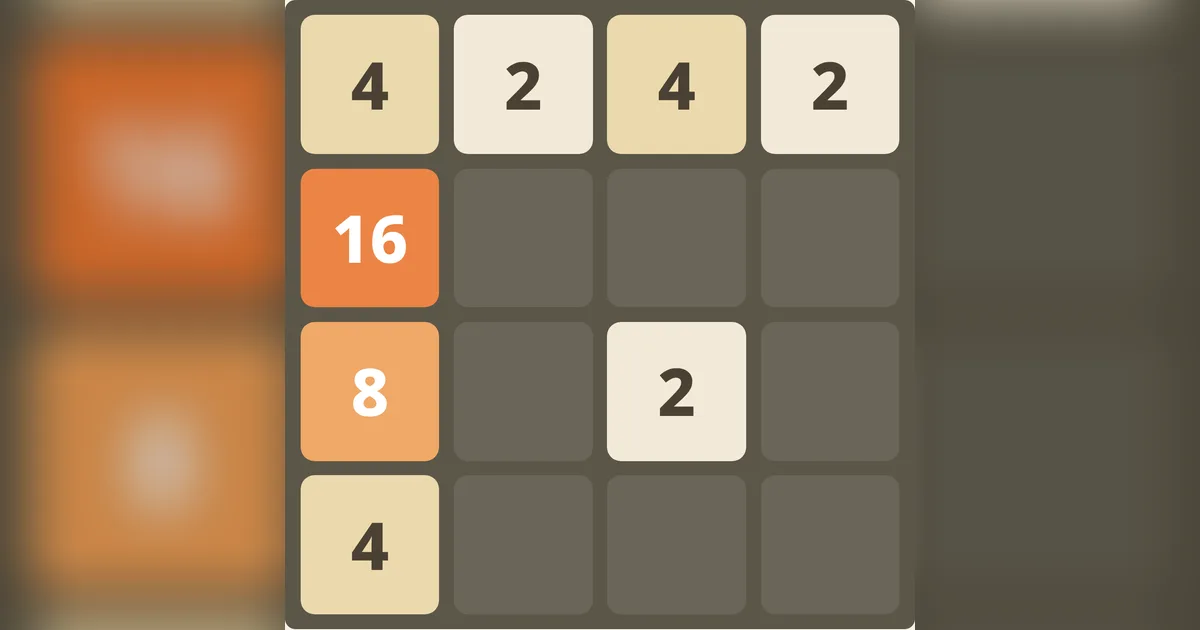
Ghép Số is live: slide and merge the number tiles to 2048, with a daily challenge for everyone
Ghép Số (2048) is live at ghepso.synerworlds.com — the number-merging puzzle on a 4×4 board: slide tiles, merge pairs to double their value up to the 2048 tile, a daily challenge with one shared game for everyone, leaderboards and move-by-move replays.
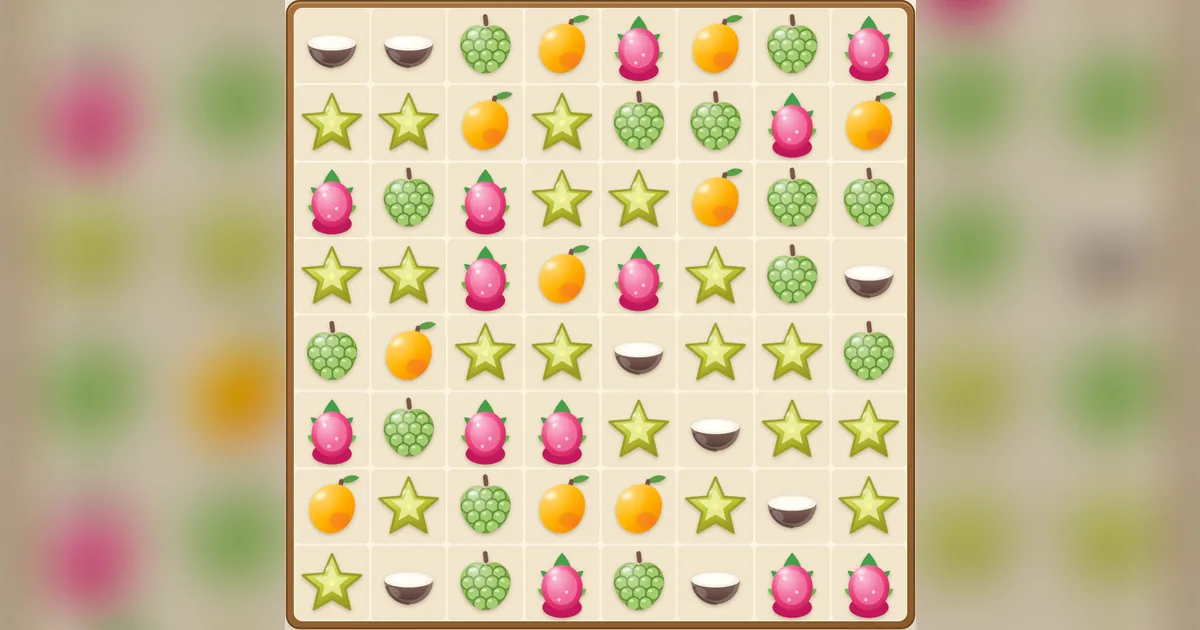
Eyes Faster Than Hands: Reading Shapes and Colours
Experienced players don't count individual fruit or beads — they see whole clusters at once. Visual pattern recognition is the scan–compare–match skill that Xếp Trái Cây and Xếp Bi train in two different ways.
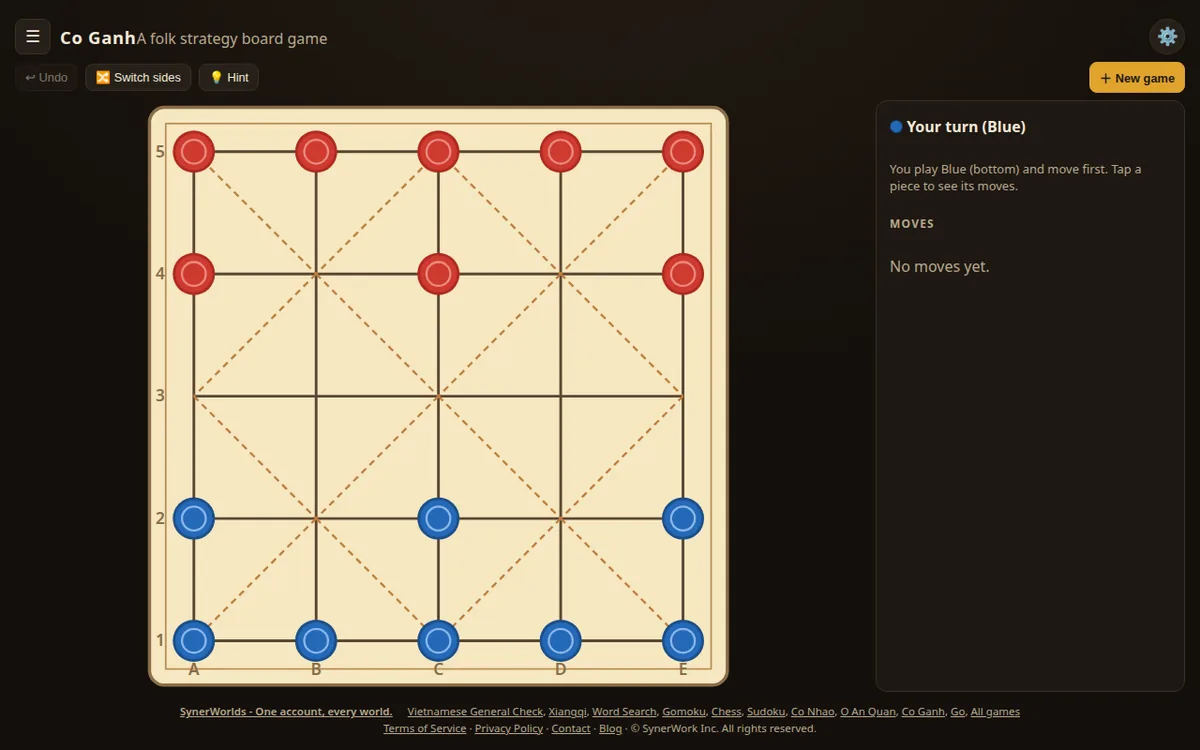
Cờ Gánh Endgames: Winning by Blockade, Liberty Races, and the Two Faces of the Fortress
As the board thins, Cờ Gánh becomes arithmetic: winning by leaving the opponent no move, liberty races between mutually surrounded groups, the endgame carry trap, and why a self-surround fortress can become a coffin.
Σχόλια
Δεν υπάρχουν σχόλια ακόμη. Γίνετε ο πρώτος που θα μοιραστεί τη γνώμη του!